Latest Posts

RA Feet and Hydroponics

When you are putting on your shoes, have you ever thought about what is inside your feet?  Did you know that twenty-five percent of the bones in the body are in the feet?  The feet each have thirty joints and more than one hundred muscles, ligaments and tendons. That is a lot of structure.

My RA started in my feet. It was largely ignored by my primary.  It was a time  before rheumatologists took RA in the feet seriously. Not that long ago. Still today an assessment tool that RA docs use every day does not include the joints of the foot.

Eventually ninety percent of those with RA have problems with the joints in their feet. Taking care of our feet is important. Our feet are necessary for mobility. I have always worn good shoes. A necessity when you are a nurse. When I am out, I wear custom inserts in special shoes. At home I wear yoga Muezna socks over regular socks. Structure and protection when I am out. Comfort at home.

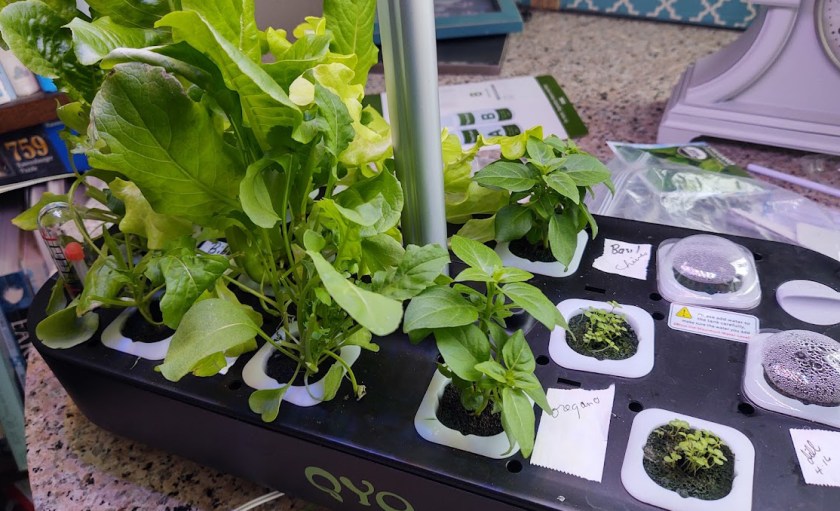
My tasty treat tomato plants are quite large. Amazing how they grew from tiny seeds into plants covered in flowers and little tomatoes. Oregano and basil thrive in the hydroponics. I have dill and thyme growing plus a milkweed plant and a sunflower plant. The last two will make their way to pots on the patio. My plan for the hydroponics is as a starter medium and also a herb garden for kitchen use.

JAK inhibitors

The first JAK inhibitor, Xeljanz (Tofacitinib), was approved for use by the FDA for rheumatoid arthritis use in 2012. It was a breakthrough medication for RA as it was the first to offer a targeted drug in pill form. It also added to the arsenal of drugs that would possibly ease the symptoms of RA.

At this time there are three  JAK inhibitors  for RA. They are taken once a day in extended-release form. The three drugs are similar in action. However, it is recommended that if one doesn’t work,  you can still try another.

The synthetic, small molecule JAK inhibitors work by  suppressing   the Janus kinase enzymes that are involved in the process of inflammation.  These drugs are classified as DMARDs, Disease Modifying  Anti-Rheumatic Drugs. A JAK inhibitor  may be prescribed when a TNF inhibitor no longer works.

  • A TB test is ordered as the JAK inhibitor may reactivate a dormant TB.
  • Lipids, liver enzymes, CBC and other labs are ordered before these drugs are prescribed and periodically during treatment as the JAK inhibitors affect the lipids, liver enzymes and blood count.
  • The shingles vaccine is given. If the chicken pox virus is dormant in an individual, , the JAK inhibitor may cause shingles.

Common side effects include diarrhea, cold symptoms, shingles, headache. May increase cholesterol numbers.

As convenient as these drugs are to take, do not take the black box warnings lightly. The complications from JAK inhibitors do happen to real people.

For a while the JAK inhibitors, pills, like Pfizer’s tofacitinib, Xeljanz, seemed like they would be a good alternative .  Tofacitinib was approved in 2012. At the time there was concern about its increased rate of infections and malignancies.

A multinational safety Oral Surveillance study was initiated in 2014 because of the above concerns. The final study analysis was published in the New England Journal of Medicine. Tofacitinib’s increased risk of major adverse cardiovascular events and incident cancers was documented. A black box warning is now included on all JAK inhibitors for risk of major cardiac event and for malignancies. The JAK inhibitors were no longer attractive.

Black box warnings are similar to those for the biologics.

  • serious infections(fungal infections, TB)
  •  lymphoma
  •  malignancies   
  • blood clotting disorders
  •  heart disorders
  • Tears in the GI tract

Pregnancy and Breastfeeding

Not recommended for use during pregnancy or breastfeeding. The JAK inhibitors are not safe for the fetus. In animal studies Rinvoq did  pass through milk. For women of childbearing age,  birth control is recommended while taking JAK inhibitors.

There are three JAK inhibitors currently approved for treatment of rheumatoid arthritis in the United States.

  • Xeljanz (Tofacitinib)                                                                                          The first JAK inhibitor approved for RA. It was first developedas an immunosuppressant for organ transplants by NIH(National Institutes of Health)and Pfizer working together.  The original prescription was for 5mg twice a day. The new version Xeljanz ER 11mg is taken once a day.  List price $2500.00/month.
  • Olumiant (Baricitinib)                                                                                A second JAK inhibitor that was approved in 2018 for Eli Lily. The prescription is 2mg once a day. List price $2300/month.
  • Rinvoq (Upadacitinib), developed by AbbVie, is a third JAK inhibitor that was approved in 2019.  The prescription is 15mg extended-release tablets. It has been widely advertised on television.  List price$5100.00/mo.

These prices are for those without insurance. With insurance the patient cost is much less. My insurance company classifies the biologics and the JAK inhibitors as class five which is a $300/month copay. My copay at the VA for the same is $25/month.

Cancer patients are brave.

I wrote this in 2014. I had just finished radiation treatment for breast cancer where I had met fellow cancer patients and I was getting ready for radiation treatment for stage three thyroid cancer. The thoughts are still relevant.

Be brave.

You can fight this thing.

You must have a good attitude.

Be positive.

Don’t cry!

You are not going to die.

Cheer up.

How does one express fear when told to be brave and fight? How does one express a searing feeling of helplessness? Fight what exactly?

A cancer patient has a good attitude every day when she wakes up and wishes her cancer is gone, but still knowing in the recesses of her heart that it is still be there and she still gets out of bed and carries on.

A cancer patient is brave every day when she accepts the changes that have come into her life and she is able  to come to terms with the reality that life will never be the same again.

A cancer patient has a positive  attitude when she endures all the insults her body will endure for the sake of treatment. Calling it a treatment doesn’t make it less barbaric or less invasive.

A cancer patient is allowed to cry. With so many life disruptions and so much invasion with drugs, surgery and radiation, it is hard not to cry.  All a person really wants is someone there. No words.

Do we die alone when others refuse to see what is real? Let’s face it. Some of us will die. We know who we are. We need help in getting through it. Plans that need to be made. Words that need to be said.  Most cancer patients in the final stage know they are there. No surprises. A cancer patient needs not to be lonely. They need to share this stage, too.

How can we do the job we need to do when we are expected to be unrealistic heroes?

Look closer at your loved one with cancer. You will see a person who is already a  hero.  You will see someone working very hard to understand what is going on, someone living her day as best she can while waiting for the last treatment to shrink the tumor or waiting for the latest test results.

You will see the struggle she has as those very markers that she identified with her life start to erode, to slip away.  She tries so hard to keep up a good front. Women who have to work through the very worst of their treatment just to keep their insurance. Moms with little children struggling to care for their children after chemo. There are many heroes among us.

A cancer patient needs a kind word, a thoughtful gesture. A cancer patient will have ups and will have downs. She will endure. Grow stronger. Be confident that she can handle her fate as she has so many times before. To help them get there, a little kindness goes a long ways.

In 2018 I had my third cancer. Treatment was brutal. It was a bad cancer. I was fortunate that for the third time my rheumatologist ordered the tests that would reveal the seriousness of it. So, it was treated early. Yes, my rheumatologist saved my life three times.

Polymyalgia rheumatica  

Polymyalgia rheumatica (PMR) is a rare inflammatory disease that causes muscle pain and stiffness. It is a disease of the elderly.  It rarely affects anyone under the age of fifty. The highest prevalence is between the ages of seventy and eighty.

Initially, rheumatoid arthritis may be misdiagnosed as polymyalgia rheumatica.

The cause is unknown but there is a genetic link and since it affects those over fifty, it may be associated with the aging process. PMR affects more women and Caucasians of northern European descent.

 It classically causes muscle pain and stiffness. It may include the neck, shoulders, upper arms, lower back, hips and thighs bilaterally. PMR does not usually include the lower arms, hands, lower legs and feet.

It frequently attacks the shoulder girdle first. One side first before the other joins in. It is more severe in the morning and after periods of inactivity. The pain and stiffness may make dressing difficult. Affected thighs and buttocks make getting out of bed difficult. Shoulder involvement causes difficulty combing and brushing hair.

There are a variety of systemic symptoms including fatigue and a feeling of not being well. About thirty percent have rheumatoid arthritis like symptoms including joint pain, swelling and destruction.

PMR is not curable. It is manageable, however. Initial treatment may be NSAIDs like ibuprofen or aspirin. Next the drug of choice is a corticosteroid such as prednisone which helps to controls the symptoms. Prednisone is usually started around 25 mg daily for a month and then tapered to a dose that controls symptoms. 

Of course, one of the problems with polymyalgia rheumatica is its association with giant cell arteritis. Fifteen to  twenty percent of those with polymyalgia rheumatica also have giant cell arteritis which is an autoimmune disease causing  inflammation in the lining of arteries particularly in the temporal arteries of the head. Symptoms include headaches, jaw pain, scalp discomfort and blurred vision. A person may have both conditions at the same time.

RA symptoms, pain and Actemra  


I was reading Kelly Mack’s article on the Persistence of Pain and it was revealing to see how many of the comments were made by individuals discussing  their own daily pain. It is true. Incapacitating pain continues to be an everyday problem for many of us who have rheumatoid arthritis.

Pain has always been the number one problem for those who have rheumatoid arthritis.  The biologics have been with us for over twenty years now. In spite of their success,  doctors are still at a loss. Many of their patients are still in pain. They may not respond to the wonder drugs. And if they do respond, they may still be in pain. These are the drugs that doctors depend on to solve their problems. They are not enough.

I am in the second week of the biologic Actemra, tocilizumab. According to the inserted literature, the best Actemra offers is a twenty percent improvement for up to sixty percent of patients,  fifty percent improvement for up to forty percent of patients, and a seventy percent improvement for up to twenty percent of patients. There is no cure for anyone and at best there is only a partial relief of symptoms.

Now there is such a twitter in the medical community about whether this pain is from inflammation or not. Why the roundabout discussion? Because it is a sideshow designed to distract us from the truth that doctors don’t know how to solve our pain problems that are caused by rheumatoid arthritis.

 Doctors know very little about rheumatoid arthritis, but they know even less about pain.  It does remind me of just how recently they thought RA fatigue was all in our head. We know how that turned out.

Why the Shingles Vaccine?

The Shingles vaccine. Rheumatoid Arthritis.

What is it, anyway?

Why take the shots when being treated with a biologic?

Varicella zoster virus (VZV)

This is the virus that causes chicken pox.

By the time the rash is gone, the virus has taken up residence

permanently in ganglionic nerve cells along the spinal cord.

There it remains dormant until later in life it reactivates and causes

herpes zoster, Shingles

 And may then lead to postherpetic neuralgia (PHN) among other neurologic disorders.

Shingrix is the two-dose vaccine

Ninety-nine percent of Americans born before 1980 will have had chickenpox. (CDC report). One in three Americans will have shingles. One in ten Americans will develop the nerve pain associated with shingles.

  • Having the vaccine when starting a biologic for your RA will prevent Varicella Zoster from reactivating.
  • Shingrix replaces Zostavax.
  • Shingrix is more effective.
  • You will need it even if you have had the Zostavax.

Your insurance may or may not pay for it. Medicare part D will pay for it, but there may be a copay.  Shingrix is recommended for everyone over fifty. It is not a live vaccine. It may be given during treatment with biologics. It is ninety percent effective in healthy adults. Sixty-eight to ninety-one percent effective in immune compromised adults. Shingrix, a two-dose vaccine. If there is a delay before the second dose, the course does not need to be restarted.

Rheumatology Appointment and Garden update

Journal

On Sunday morning when my little cock-a-poo, Francis, went outdoors for the first time of the day he came back in quickly. He stopped. He turned, poked his head out the door, raised his head so his nose could be as high as possible, and he sniffed. I couldn’t smell it, but Francis was smelling the smoke from one of our forest fires.

Our governor has declared a state of emergency in four of New Mexico’s counties. Dry land, wind, heat. Fire season. We seem to be safe in Albuquerque. A few years back we had raging fires in our Bosque. Close to home.  One year the fires were so bad in California  our air was thick with smoke.

I have a friend whose husband was a firefighter in California. He died of cancer. Cancer is common among firefighters because of all the toxic fumes they inhale.

Monday,  I had an appointment with my rheumatologist, Dr. R. We had a lot to discuss. She seemed relaxed and less intense than usual. She had scheduled the appointment for an hour. It seemed I was her last appointment. Naturally, we talked for over an hour. I had brought a pain log that covered the last few months. I had also brought a list of items I wanted to discuss.

  • Orencia was no longer working.
  • I did not want to be on Imuran. It takes twelve weeks to work. It also has its own set of side effects and complications.  
  • I am willing to try Actemra. I thought it was working the two times we tried it even though I hadn’t been on it long. We had to stop the first time because I was diagnosed with cancer and the second time when I had open wounds on my ankles.  
  • I have had the current vaccine for shingles. Labs done. I did point out I had diverticulitis several years ago and I had histoplasmosis when I was living in Nebraska. Both of these are potential reoccurrences with Actemra.
  • I should be able to start the Actemra this weekend. She wants to continue the Medrol with a very slow taper.
  • She reviewed my recent MRI with me. As expected, my back is continuing to degenerate  and the degeneration is up into my thoracic spine. She said many patients with a similar back condition are bed ridden. I appreciate my good fortunate. I hope it lasts.
  • She discussed my pain doctor. Apparently, the pharmacist who manages pain medicine was at a conference. She is back and working to understand my needs. My pain medicine arrived yesterday. Ahead of schedule.

After a chest x-ray and labs, we were  about the last to leave. We drove through rush hour traffic. Welcomed home by Francis. Dinner of fresh chicken ravioli with a salad. Always good to be home.  

PS

My hydroponic garden has produced graduates: my tasty treat tomatoes, basil and enough lettuce to supplement three salads. My Hosta are growing and being ignored by the squirrels as is my herb garden. My plan is to transplant my two tomato plants outdoors, one for us and the other for the squirrels.

Shoulder Rheumatoid Arthritis

My shoulders were intensely painful when my RA began. Shoulder involvement is common when RA begins in older age, EORA.  Elderly onset rheumatoid arthritis is also a rheumatoid arthritis that is more painful and destructive.

The shoulder is made up of the clavicle in the front, the scapula in the back, and the head of the upper arm bone, the humerus. The socket is shallow unlike the deep hip socket. This creates a big, flexible joint that can move in many directions. It is a ball and socket joint called glenohumeral joint. We can feel it when we lift our arm. It is also an unstable joint. The rotator cuff, a group of muscles and their tendons, stabilize the joint.

  • The shoulder joint is lined with synovial tissue.
  • Bursae, also lined with synovial tissue, help protect the bones and tendons.
  • Add to this, the tendons are protected with synovial lined sleeves.

All this synovial tissue is a target for rheumatoid arthritis.

Add to this, the shoulder has a second joint called the acromioclavicular joint. This joint connects the clavicle with the tip of the scapula. It is a plane synovial joint where its motion is restricted to gliding.

Rheumatoid arthritis is a likely cause for several shoulder disorders. Rotator cuff degeneration is one. Frozen shoulder is another. Bursitis is one more.

These conditions add to the inflammation, pain and immobility of rheumatoid arthritis. I have a difficult time changing shirts. Its very painful. To get the shirt off, I slip my hand under my shirt to the  under-arm part of the shirt, grip the sleeve and then slide it off. I repeat with the other arm. I bend and slip the shirt over my head.

Sleeping can be difficult and painful with inflamed shoulders. I sleep on my side. I have two pillows on each side of my bed. I pull them down so that my shoulders are near the pillows but not on them.

I also use a mattress pad warmer, a long-ago suggestion from my sister-in-law Cathy. It helps. It feels especially cozy in the wee hours of the morning when the RA pain is starting to rachet up.

We often think of the fingers and toes when we think of rheumatoid arthritis. Shoulder involvement is incapacitating and painful. It occurs more often in advanced cases of RA. It also occurs when RA is diagnosed in older age.

And the answer is Actemra

Albuquerque today. We are overcast and windy and warm. A good day to stay indoors. My Hosta are finally poking their little heads through the dirt.  After my garden neglect of last summer, I was worried that I killed them. Sturdy little guys. Happy to see them. I covered them with a netting. The squirrels like to munch on them as they come up. Once they are established, I remove the netting. The squirrels will have moved on to something else.

My hydroponic garden is doing well. The tomatoes have been transplanted into pots. We have had the lettuce in our salad three times. I have used the basil. The oregano is tiny.

I emailed my rheumatologist this morning. My Orencia, abatacept, is working but only about 15%. Not enough. She said that maybe we need to skip Imuran, and return to Actemra, tocilizumab. The last time we talked about it, I brought up my concern about rupturing diverticulitis, a complication. She suggested that I just go to the emergency room if I have a problem. 

You remember this logic,

  • if you say it is a poison and
  • you know it is a poison, but
  • you are told it will help RA symptoms,
  • you will agree  take it
  • you persuade yourself,
  • there will be no complications
  • your doctor agrees
  • I wish you luck
  • I wish myself luck

Most of us agree with the choice. RA symptoms are too difficult to live with and the doctors have little else in their toolboxes. The biologics are wonder drugs for some until they are not. For the thirty percent of us who have no relief, the science is still lacking.

Spondyloarthritis

We have talked about ankylosing spondylosis in the past. It is an inflammatory disease that is part of a group of diseases named spondyloarthritis(SpA) in 2009. Spondyloarthritis  essentially means arthritis of the spine.

Over 3.2 million adults have a form of the disease which usually starts under the age of 45.  It is a larger number than RA, Lupus and MS combined. Women are affected. It was once thought to be a disease of men. The symptoms are a little different for women.

The Spondylitis Association of America divides the individual diseases into two overlapping groups.

Group one

This group includes axial spondyloarthritis and non-radiographic axial spondyloarthritis. These diseases affect the spine and pelvic girdle. Both can be severe disease. They range from disease with spinal changes seen on x-ray to disease with no noticeable spinal changes seen on x-ray.

Axial spondyloarthritis(AxSpA)

  • Commonly called ankylosing spondylitis, affecting the spine where fusing changes are seen on x-ray.

Non-radiographic axial spondyloarthritis (nr-AxSpA)

  • Primarily affects the spine without the characteristic bone changes seen on x-ray. Women are more likely to have this type. One of the reasons women have a harder time receiving a diagnosis is because they do not have the radiographic changes on x-ray and their symptoms may be different than those for men.  For example, men might have symptoms including the lower spine. Women might have symptoms involving the cervical spine.

Overlapping the two groups:

Juvenile Spondyloarthritis (JSpA) It is hard to imagine young children suffering from this disease. Some children may have predominantly spinal symptoms. Other children may have predominately peripheral symptoms with pain and arthritis occurring in the hips, knees and ankles. Juvenile Spondyloarthritis incudes subcategories of all the spondyloarthritis diseases that adults have. Spondykids.org.

Group two

This group of related diseases also includes pain and inflammation in joints in the peripheral joints of the body.

Psoriatic arthritis (PsA) causes pain and swelling of the small joints of the hands and feet.  It is preceded by psoriasis which causes scaly patches on the skin. It may also affect the spine.

Enteropathic Arthritis(EnA) is an inflammatory spinal and joint arthritis associated with an inflammatory intestinal  disease such as Crohn’s, ulcerative colitis and undifferentiated colitis.

Reactive Arthritis (ReA) is caused by an infection usually in the intestines or urinary tract. It is limited in nature but is inclined to reoccur and may develop into a chronic arthritis. It may cause pain and inflammation in the joints, skin, eyes, bladder, genitals, and mucous membranes. Occasionally, it will affect the spine.

Undifferentiated spondyloarthritis (USpA) is a disease with characteristics of spondyloarthritis but doesn’t fit into any of the above categories.

It just goes to reinforce the notion that one size does not fit all.