Author: Mary Mann

RA Fog

Last month I finally filled out the form for the Arthritis Foundation, made out my $20 check and mailed it in. A few days ago I received my first copy of Arthritis Today. I was surprised and impressed. It is a small magazine, not cluttered by pages of ads.  The focus of the magazine is to be helpful to those with arthritis. It is. There are interesting and helpful articles. I enjoyed the article about Clark Middleton. He was the DMV guy on the series the Blacklist. Funny character. He had juvenile idiopathic arthritis as a child. He had many joint replacements and continues today with methotrexate and a biologic. His is the story of a man who has accomplished a lot while coping with a debilitating disease. The article on Brain Fog reminded me of methotrexate fog. That was a hurdle for me as I settled into methotrexate treatment. I was a sharp business woman. I had to be in order to stay in business for over 25 years. I had always done my own …

RA and Yoga

My first yoga experience was about 15 years ago. I belonged to Riverpoint, a sports and wellness club in Albuquerque. All classes were included in membership price. The evening I was at the club, a yoga class was just starting. I thought I would give it a try. I knew nothing about yoga. No mat and no clue. I walked into an advanced class. I was so very fortunate to have an excellent, progressive teacher. She welcomed me. I was also welcomed by her class.  I took classes with her for about four years before she headed off to Costa Rica. She believed people should start where they are at. She said yoga is not competitive with yourself or with any one else. I learned good form. I bought a yoga mat and thanks to her I still have a yoga practice. The first two years after my RA diagnosis I tried classes and just couldn’t do it. My feet and my wrists hurt too much. So I stopped. Looking back I could have done …

RA treatment in the 1920s

In the early days of the twentieth century very little was known about rheumatoid arthritis.  It might have been called chronic infectious arthritis, proliferative arthritis or atrophic arthritis. Rheumatology was not a specialty. There were no rheumatologists. It was not a good time to have RA. Arthritis treatment at the Mayo Clinic  included bed rest. Patients were admitted to the hospital and put on bed rest for several weeks. They were given a balanced diet. Physical therapy was an important therapy. It improved range of motion, strengthened muscles and prevented deformities. Heat and massage were used  to improve circulation and to remove toxins. Bracing and casting were used to support joints and reduce contractions. Canes were prescribed. Shoe corrections were prescribed. Vaccine therapy, fever therapy and sympathectomy were popular treatments at the Mayo Clinic based on the theories of the time. As medical knowledge grew these therapies fell out of favor. Salicylates were drugs of choice. Remember this was before sulfa, penicillin and cortisone. It a was long time before ibuprofen would be formulated. Any …

Purging, Bloodletting and Algorithms

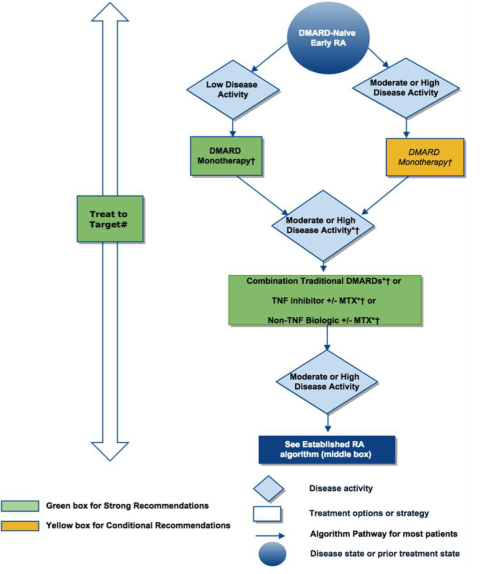
At the beginning of the twentieth century, the old remedies of purging and bloodletting were left behind. Lister’s concepts of cleanliness had finally become widely accepted. Human anatomy was documented. The culprits of bacteria were identified. Medical knowledge base was growing beyond imagination. Yet doctors were stuck. There was no cure for a bacterial infection. There was no cure for a strep infection. If you were stricken with a strep throat, there was a good chance that you would die. Doctors had no solutions and people of all ages died from pneumonia, wound infections, meningitis, and more. Infection was feared. Today all this is unimaginable. But then, Ehrlich’s ‘magic bullet’ was yet to be discovered. The world changed forever with the discoveries of sulfa in 1936. Penicillin was refined and put into production in the 1940s. There were many more ‘magic bullets’ to follow. Doctors finally had new tools for their toolbox. It became the age of knowledge plus tools. Life became much better. Lifespans became longer. Today, in the twenty-first century, our doctors have …

The Classic Symptoms Of RA

The Classic Symptoms Of RA Symptoms may vary during a day and from day to day and from person to person. The unpredictability of symptoms makes daily activities harder to plan. The following are symptoms common to Rheumatoid Arthritis. Pain is a hallmark of rheumatoid arthritis. Pain comes in many forms in the same person. It is sharp as the edge of broken glass. It is burning. Aching. It is incapacitating and it can be unrelenting. Consuming. Sometimes it is excruciating. The middle joints of the fingers, the knuckles, wrists, the joints in the toes and the feet are affected. The shoulders, elbows, knees and ankles, and the hips become affected. The cervical spine is frequently affected. The lumbar and thoracic spines can be affected but less commonly. Pain may make it hard to get out of bed in the morning. Pain may increase as the day wears on. Pain can wake you in the middle of the night. The trouble is that the pain is not isolated to one spot. It encompasses many joints …

My Military family

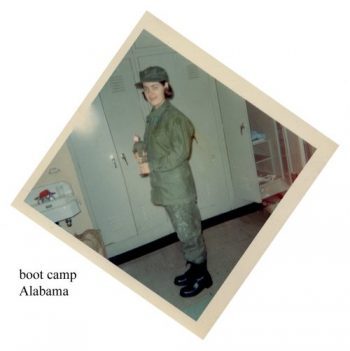
This picture is one of few I have of my military career. It was a beginning. I am proud of my family’s service to our country. My dad was Army in WWII. My uncle was a bomber navigator. His plane was shot down over Africa and he was the only survivor. He was nursed back to health by Catholic nuns. Another uncle was stationed in Japan in the 50s. My brother was Air Force in the late 60s. I was an Air Force nurse during the same time frame. My children’s father was career Air Force. My son Steven was also career Air Force with several tours in Afghanistan. We were all proud to serve.

EORA or YORA another RA category

Imagine my surprise when I learned about the initials YORA and EORA. YORA is an acronym for Younger Onset Rheumatoid Arthritis as is EORA for Elderly Onset Rheumatoid Arthritis. I came to a new understanding of where I am in the scheme of things. Rheumatoid Arthritis (RA) can strike at any age from babies to the elderly. The elderly’s association with RA can be of long standing disease or it can be a new development. People who develop RA after age 60 are considered EORA. That is me. There are some notable differences with elderly onset RA. Initial symptoms may include large joints. With younger RA  onset small joints of the hands and the feet are usually first signs of joint involvement.  The shoulder joint may be a presenting joint in older onset.  My shoulder was involved initially as was the joints in my hands, wrists, feet, elbows. Initially I was in severe pain. Older adults may have more generalized symptoms. My grip was weak. I lost weight. I couldn’t sleep because of the severity …