Latest Posts

Mary Man's RA Journal Icon

RA Journal Progression

Mary’s Arthritis Journal May 8, 2021

I have always been amazed by those who can work through illness. I once had a friend who had a chronic leukemia. During episodes of chemo, she found that she could not sleep. Instead of watching endless Netflix, she spent her nights researching and writing a successful blog on ghost stories. She used her down time to her advantage. I am not like her. I wallow. I vegetate. My brain seems to stop working.

When my rheumatoid arthritis is sending inflammatory messengers throughout my body, when pain is attacking every moveable joint, when I have depleted my stores of coping, I retreat. My body feels sick. My research goes on hold as does my writing. My mind is stuck in a quagmire. There is only a wish to escape and a hope that there will be an end, and in that end, I will be alive again. I will be okay.

My flares are becoming something to be feared. My ankles and my toes remain swollen. It is very hard to walk. My knuckles are swollen. Its amazing how much pain can emanate from them.  Pain seeps into my wrists and then elbows. My shoulders get that old feeling of having shards of glass in them. There is more, but you get the idea. Flares are painful, exhausting, discouraging.  My RA is progressing, worsening.  As my RA progresses and worsens, the spaces between flares are dissolving. I am becoming a living, permanent flare.  No more reprieves. 

I was on methotrexate for eight years. I have been diagnosed with three cancers and had the treatment for each including radiation for breast cancer. A few years ago, I developed a severe, necrotic infection in the tissue that had been radiated. The cause was methotrexate. Black box warning number 13 for methotrexate is soft tissue necrosis.  I had to stop the methotrexate. My treatment arsenal was empty. My only relief was with Medrol which clearly has limits.   

My doc and I agreed to try abatacept again. I have been injecting it for five weeks. Abatacept offers a 20% improvement for half of the patients who have been trying it for three months. Although I will take anything I can get, the biologic, at 20%, is barely taking the edge off. But it offers the hope that at six months on abatacept, I will have the possibility of reaching 50% relief.  Hope.

Managing RA

I am an optimist. But I am also a realist. When faced with a painful situation, I sometimes  dance around the issue for a few turns. Then, painful, or not, I face whatever it is,  deal with it and then do my best to move on. Stiff upper lip and all that.

Each time I was diagnosed with a new cancer I did just that. I never once thought why me. I had the surgery, the chemo, the radiation. Suffered through it. Recovered for the most part and moved on. I felt that none of those three cancers would ever return as the treatments were brutal to my body and left nothing unaffected. My method of handling problems worked with cancer.

Then I was diagnosed with rheumatoid arthritis almost eight years ago. RA is a painful, debilitating and a  lifelong disease. It is a disease that must be dealt with daily. RA will not go away just because I am weary of living with it. It is forever.

It is not a problem to be solved. It is a reality to be managed.  I see so many others I know suffer through their chronic illnesses.  What makes managing so hard is that the suffering is not  temporary or occasional or uncommon. It is embedded into the fabric of our lives.  Managing pain. Managing energy levels. Living with complications from our diseases or from the medications used to treat them. Fear of what is coming next.

Then there are the medications for rheumatoid arthritis. These are the  DMARDs, the Disease Modifying Anti-Rheumatic Drugs. These include the popular methotrexate and hydroxychloroquine. They also include the biologics such as Humira and Actemra. All these drugs have side effects and their own sets of complications. None of these drugs offer a cure. The decision to take them is sometimes easy because a person with RA can feel desperate. The decision can be difficult. The biologics are expensive even with insurance.

And I have grown to agree with the many who say rheumatoid arthritis is a bad choice for its name. Those of us with RA do not have ‘a little arthritis’. We have a painful, systemic, autoimmune disease that is totally and painfully debilitating. It causes systemic inflammation that courses throughout the body and causes a fatigue that is exhausting.

My RA is seronegative. Seropositive RA has more bony erosions. Seronegative RA has more severe inflammation. After the first few years their courses are similar.

RA affects the joints symmetrically, right side and left. It can  inflame any or all the  synovial linings of  moveable joints, tendons, and bursae.  It is an inflammation to be feared.

Those with RA are highly likely to become work disabled. This is true today even with the newer RA drugs available.

Some think the RA biologics are the wonder drugs of our time. For some, they are. They are at least for a time. The best relief  that is possible from a biologic DMARD is 70% and that is for a small number of lucky people. So far, no medication causes complete relief. Biologics do not work at all for about a third of those with RA.  Some have 20% relief. Others have 50% relief as I did when I was on Orencia  until  it stopped working. So everyone with RA is left dealing with some of  the symptoms.

The biologics act by interfering with specific inflammation pathways. There are many inflammation pathways in your body. If your medication is not affecting the pathways being affected by RA in your body, you will not experience relief. So far RA biologic medication is an expensive crapshoot. Matching a patient to the right medication that will probably not help more than 20-50%. And yes,  I do agree 20% relief is better than none.

There are many of us who have had rheumatoid arthritis for years.  We each have our own personal experience with the disease. We have learned to do what we need to manage the rhythm of our daily RA  experience.  Managing energy levels. Managing flares.

We eventually come to understand that our RA will never go away.  RA is not a problem to  be solved. It is a disease that must be lived. Even though we struggle, we try to take  days as they come living the ebb and flow of this unpredictable disease.

Lockdown Update

We are still locked down. We go to Costco and to Smiths. We travel out with our masks and our hand sanitizers. Those we meet are friendly and have smiling eyes behind their masks. If a person depended on reading lips to understand another, they are currently out of luck. Who would have guessed? Certainly not last September. Life changes so quickly.

My garden is winding down. The squirrels are fat and happy after eating my tomatoes. The roadrunner couple I saw having sex in my back yard now have healthy teenagers who are as aggressive about eating birds as their parents. Our quail population is booming. They love quail blocks and nest along side the squirrels on a little used side of my property.

I make bread every couple of days. I have many recipes for rye bread, but rye flour is now unattainable. Not enough planted by the farmers for the current demand. I also make a lot of oatmeal bread. Lucky for me. I make my own buns for bratwurst. I also have a recipe for frosted cinnamon rolls. They are very good.

I like to cook, and my son likes to eat. We make a fine pair.

My RA is a struggle.  Since I no longer can have methotrexate, I am currently left with Medrol and diclofenac gel. Medrol has been shown to reduce joint damage. As more research is done, the scientists are finding that steroids in moderate amounts are therapeutic.  I have been on prednisone or medrol for seven years. My bone density is good. Other than the necrotic breast tissue and infection I had from taking methotrexate, I have been infection free. It took 10 months for the necrotic tissue to heal. It is a relief not to have a leaking breast.

I have learned to pace myself. It is wise to keep moving as prolonged sitting is a dangerous thing. See I am writing this update and next I will go into the kitchen and start dinner.

At home with RA and Covid March 2020

We live in Albuquerque. Sunny day. Tomato plants outgrowing their nursery. Pantry is stocked as usual, and our internet is dependable. Doctor appointments are via phone. Trips to the grocery store are carefully planned. There is no bread flour or other baking supplies on the grocery shelves. Eggs can be hard to get. There is no food in Amazon’s Pantry.  We are on lockdown. Yet we still count ourselves as lucky people.

We do not have the virus. No one in our family has the virus. Francis, our little cockapoo, is healthy. Our pantry shelves are stocked. Our income, at this moment, is as it should be. Our home is safe. We are lucky.

I have rheumatoid arthritis. Recently I had to stop taking my RA meds, methotrexate and hydroxychloroquine as two of my cancer docs said to stop. I had developed necrotic, infected tissue from breast cancer radiation treatment. This infection started in October. I had a partial mastectomy in December followed by a severe cellulitis. Now after months of treatment at the wound clinic, there is great progress. I am now injecting honey by syringe and blunt nosed needle into what is left of the wound, and it is gradually healing. My nurse said healing is quicker than she thought it would be.

A few weeks ago, I developed a severe RA flare. Many of my joints are affected by RA. In a flare it feels as though my whole body is inflamed. I was quickly becoming incapacitated. I could hardly walk down to the kitchen. My RA doc is always saying treatment is a balance with quality of life.

I restarted my methotrexate but only at 12.5 mg subq. This was half my normal dose. I also restarted the hydroxychloroquine. I started a Medrol dose pack. Now a few weeks out I am stable. I have always had a running level of inflammation in my body. So, it is still there but tolerable. I am no longer on the edge of not functioning. Lucky again.

My biggest worry right now is figuring out how to keep my growing tomato plants happy in the house until the nights are warm enough to keep them outdoors. It won’t be long. I miss going to Lowe’s nursery. Since I can’t go to the nursery, I decided to start growing marigolds from seeds too.

Hope my writing finds you well.

Seven year anniversary and infection

It was seven years ago this month. I was acutely ill with my first encounter of rheumatoid arthritis. My illness had not been given a name yet. A week before that I had seen the ER doc who started me on prednisone and who was  sending me to the rheumatologist that I would see in about another week. I had very little sleep. A few hours a night at most. I was in excruciating pain. Life was not good.

I can look back with a sense of relief. I no longer have the kind of pain that made me think I had broken glass shards in my joints. It took several years after my diagnosis for my RA to settle down. I never went into remission. My inflammation has always simmered. Methotrexate was my base. I finally settled into 25 mg subq once a week. It helped. After a few years my pain was never quite the same as it was originally. My feet became central to my discomfort. Custom orthotics and Dr Comfort shoes made a big difference. My feet became deformed. I developed neuropathy. I walk with a cane.

I was not given a biologic DMARD at the time because I developed two cancers the same year as my RA. A few years ago, I was started first on Rituxan and then later on Orencia. The Orencia helped for  a year, I was just getting started on Actemra when I developed the third cancer. I was just getting started on Actemra a second time when I developed an abscess in necrotic radiated breast tissue. The infection has continued on through surgery and now a month following surgery, There will be no more Actemra. The surgeon had me stop the methotrexate.

I have been off methotrexate for about three weeks. This is the longest since I started it. I’m not sure how things will work out. I still have the infection, the irrigations, the draining crud. My joints continue to simmer and burn. But so far, I have no feeling of glass in the joints or the extreme malaise that comes with it. Guess I will just wait and see what happens next.

Note:  It took ten months for the wound to heal. It necrotic tissue was caused by methotrexate. Soft tissue necrosis is the thirteenth black box warning for methotrexate.

Surviving Food, Nutrition and RA

This is the first few pages of the nutrition section in my up coming book Self-Managing Rheumatoid Arthritis.

Surviving Food, Nutrition and RA

We all know that good nutrition is an important part of staying healthy. Most of us have limited knowledge on what constitutes eating well. Our problems are many when we try to figure this out. What is good nutrition? How does it fit into our family style? How do we manage when we have pain and fatigue? How do we manage when our budgets are limited?

 To complicate matters, each of us is unique both in body make-up and in our responses to our environment. We need diets or food plans that work for us individually. It is a given that a good diet will help you manage your RA. Good food will help. You might already realize your particular dietary needs.

Some will do better on a vegetarian diet. Some will do better without dairy. Many will thrive on a Mediterranean diet or an anti-inflammatory diet. Some are gluten intolerant. Some will be coping with food allergies. The challenge is to find the diet that works for you as an individual. The challenge is to let yourself choose a diet that works for your body. Trial and error works but first you will need to decide what foods you are willing to include in your plan and establish an approach that will work for you.

All of us will do better if we avoid empty calorie food, processed food, large amounts of sugary or white flour food. We will do better when  we add more fruits and vegetables.

A common but little-known complication of RA is malnutrition.  In fact, it is estimated that more than 40% of rheumatoid arthritis patients are malnourished.  This doesn’t mean that you are skinny. It means that your body is not getting the nutrients you need to be healthy. RA patients are living in a constant state of inflammation. The increased production of cytokines increases resting metabolism and protein breakdown. People with RA need a reliable protein source daily.  

Another part of our problem is that RA can cause such overwhelming fatigue and pain that it is difficult to muster the energy to prepare and then eat a meal. Just to make a sandwich requires unwrapping the bread, putting the slices on a plate, wrapping the bread bag back up, opening containers and adding spreads, meat or veggies, closing containers, putting them away. Sitting down at the table with your sandwich and eating it. Sounds easy enough. But if you are so wiped out by the extreme fatigue of RA and your hands are swollen and ache deeply in a way that is hard to explain, making a sandwich can be an overwhelming task. It is a task that can be skipped. And it frequently is.

Yet we know that RA is a lifetime experience and we need to eat despite our infirmities.

For those with chronic illness, nutrition is especially important. Frequently, someone with RA will likely have other issues such as diabetes or hypertension or another autoimmune disease. Such issues must be taken into consideration.

Those with RA have a variety of lifestyles. Some live alone. Some live with spouses. Some live with a family member like I do. There are those raising children. There are those caring for elderly parents. For each of these family combinations, we have responsibilities toward providing healthy meals. The needs of our family members don’t go away because we have RA.

Income is an issue. Many of us have limited incomes. With RA, medication is a necessity, and it is expensive. Food expense is a variable especially when a person lives alone. The food allowance may be the part of our budget that is reduced when medication costs are increased. Nutrition suffers.

Unable to perform routine activities of daily living, cooking and shopping. Pain in movement of the hands. Lack of energy in getting to the store. Mouth is dry, food is too hard to chew. Jaw joints have RA and it is painful to chew. RA creates a mountain of obstacles  to overcome.

Additionally, it is difficult to rally the energy to go to the grocery store, get out of the car, walk in, select items, pay for them, go back to the car, put the groceries in, get in yourself, drive home, carry the groceries inside, and put them away. Exhausting thought. Nap time.

How do you survive all this?

I think it starts with rebooting our approach to managing. It starts with learning the essentials of what do we need to know about eating well. It starts with learning how can we manage without collapsing on the kitchen floor. It starts with learning the shortcuts. It starts with the reality of where we are. It starts with learning to manage with what we have to work with.

We all know that we need protein. Plan to have it. A supply of boiled eggs in the frig. Cottage cheese maybe. Pick up a rotisserie chicken at the grocery. It is cheaper than fast food. It is a good source of protein. We need vegetables. Pick up a packaged salad or a pound of carrots. A frozen package of carrots and peas at Smiths is $1 and takes 6 minutes in the microwave. Life can be very good. Food doesn’t have to be expensive. And it doesn’t have to be a lot of work.

Choose a diet style that appeals to you

Eat fruits and vegetables and protein daily. Eat real food. Avoid processed food.

This is the mantra. It means eating fruit and vegetables. Fruit is sweet and takes care of your sweet tooth. Vegetables are moist and taste good in a dry mouth. There are many sources protein from chicken to peanut butter. Fast food and frozen pizza are empty calories and have no nutritional value. When someone chooses one of the following diets and subsequently sticks with it, it is probably a diet that agrees with the individual’s body type. All these diets can be healthy. Choose wisely.

 to be continued…

Infection and off methotrexate

I stopped taking Actemra. I had only two doses this time. Last week I stopped taking methotrexate. I had been on it since 2013. All this was at  a suggestion from my oncologist who was helping me battle a severe breast infection. The infection started in October 2019. I went to a wound clinic for a month. I had surgery to debride necrotic, radiated breast tissue 13 December.

Then the infection returned. Perhaps it had never left. I also developed a severe cellulitis. The cellulitis covered my entire breast or what was left of it. Now the cellulitis is down to a couple of inches. The whole thing was caused by  the radiation treatment that I had for breast cancer in 2013. The radiated tissue became necrotic and infected. It is not uncommon. I wonder what part my RA drugs played in this long standing dilemma. This infection has gone on for three months.

I do know that methotrexate should be stopped while a person is on an antibiotic. Methotrexate should not be used at the same time a person is prescribed Bactrim.

This will be the longest time that I have been off a DMARD. . Maybe this is a good thing. I might be fine without it. My RA has always felt systemic. When I am flaring, my whole body feels sick. I have many joints that are inflamed at a same time. Too many to count. As you can see I am a little nervous about this.

I have not had an infection associated with taking RA drugs except the time I developed a severe flu when I had been on Orencia for a year.

I am feeling better. I still irrigate my wound and have since October, so it is part of my routine. I will be glad when it is done. I do see stopping methotrexate as the grand experiment to see if I can manage my RA without drugs.

Life is good

Christmas is surrounding us. Thoughtful considerations given. Small kindnesses. Music. Good chocolate. Desserts. Hugs. Packages in shiny paper. And the knowledge I am cared for. I feel fortunate.

I have loved ones to share the holidays and although I am a little wobbly at times, I am able to do my favorite activities for the season.

I have had past years where I have felt frightfully alone. I have been fearful for my life. I have been fearful for my future. But now my heart has settled down. I know better who I am.  I feel satisfied with myself. I accept my place in the world and I am grateful for it.

Life is good. My son and I took Francis for a picture with Santa at Petco. We were first. Francis growled at a young French Bull dog and then sat on Santa’s lap like they were old friends. Another good memory.

Our core and why we need it


Our core is our foundation. It is the stabilizer muscles. It links the upper body with the lower body. Our core  keeps us upright, agile, and able to perform all the daily tasks that constitute our lives. The core muscles are located in our trunk.

Our core is a muscular corset that keeps our organs inside, our backs upright and our bodies able to do their job.  It lets us twist and bend.  A strong core will keep us in good shape as we age and when we are ill.

With a strong core we are less likely to fall as we get older. We are less likely to have back problems. We use our core when we do housework and when we play golf. We use our core when we play with our children and when we have sex.

The quality of our activity depends on our core. The core comprises groups of muscles with strange sounding names. The rectus abdominis, transverse abdominis; the obliques, front and side,  lower lats, erector spinae, running the length of the spine both sides;  the iliopsoas and quadratus lumborum in your pelvis, the glutes.

Muscles in the butt and hips, muscles around your spine, your abs, muscles in the middle and upper back are words we understand and muscles we can feel. Many muscles of our core are deep within our body. We only notice them when we cough, sneeze, or laugh.

Swimming is the best all muscle exercise. I it takes care of all those deep muscles. A good yoga routine covers it all also. The recumbent bike is a great exercise for the hip and the butt. An overall conditioning class like the Silver Sneakers Classic gives our core a good work out, too.

RA in New Mexico

I have Rheumatoid Arthritis in New Mexico.

Are there advantages to living in New Mexico with RA?

Sure there are.

The climate is high desert and very dry.

Humidity is tough for many situations.

It is frequently hard on the joints.

  Less humidity is a good thing.

Another one.

New Mexico is sunny.

Our brains love light.

Light helps to keep us happy.

RAers need happy help.

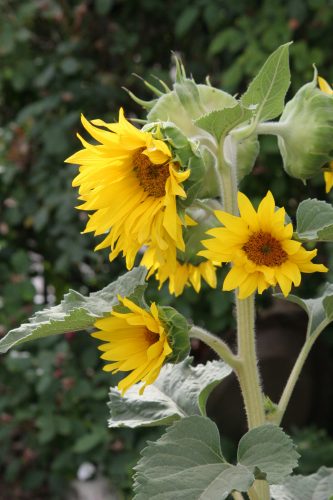
Sunflowers are like happy pills.

They make us smile.

New Mexico is a good place to have RA.